Barbara Di Eugenio is an Italian-American computer scientist, the Collegiate Warren S. McCulloch Professor of Computer Science at the University of Illinois Chicago. Her research focuses on natural language processing and its applications to human–computer interaction, educational technology, and artificial intelligence in healthcare. == Education and career == Di Eugenio is originally from Turin. After an undergraduate education in Italy, she completed her Ph.D. in computer and information science in 1993 at the University of Pennsylvania. Her dissertation, Understanding Natural Language Instructions: A Computational Approach to Purpose Clauses, was supervised by Bonnie Webber. She became a faculty member at the University of Illinois Chicago in 1999, and at that time was the only woman faculty member in the Department of Electrical Engineering and Computer Science. == Recognition == In 2022, Di Eugenio received the Zenith Award of the Association for Women in Science. She was named as a Fellow of the Association for Computational Linguistics in 2023, "for outstanding contributions to natural language generation; intelligent tutoring systems; discourse; intercoder agreement; and applying multimodal interactive systems to health".
Developmental robotics
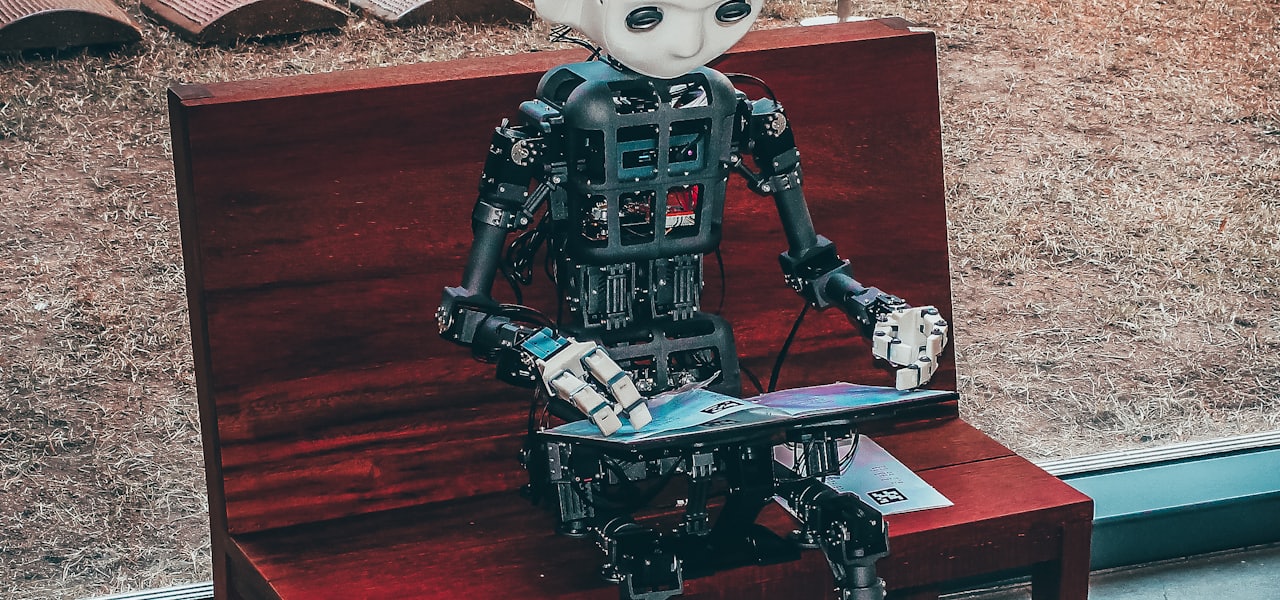
Developmental robotics (DevRob), sometimes called epigenetic robotics, is a scientific field which aims at studying the developmental mechanisms, architectures and constraints that allow lifelong and open-ended learning of new skills and new knowledge in embodied machines. As in human children, learning is expected to be cumulative and of progressively increasing complexity, and to result from self-exploration of the world in combination with social interaction. The typical methodological approach consists in starting from theories of human and animal development elaborated in fields such as developmental psychology, neuroscience, developmental and evolutionary biology, and linguistics, then to formalize and implement them in robots, sometimes exploring extensions or variants of them. The experimentation of those models in robots allows researchers to confront them with reality, and as a consequence, developmental robotics also provides feedback and novel hypotheses on theories of human and animal development. Developmental robotics is related to but differs from evolutionary robotics (ER). ER uses populations of robots that evolve over time, whereas DevRob is interested in how the organization of a single robot's control system develops through experience, over time. DevRob is also related to work done in the domains of robotics and artificial life. == Background == Can a robot learn like a child? Can it learn a variety of new skills and new knowledge unspecified at design time and in a partially unknown and changing environment? How can it discover its body and its relationships with the physical and social environment? How can its cognitive capacities continuously develop without the intervention of an engineer once it is "out of the factory"? What can it learn through natural social interactions with humans? These are the questions at the center of developmental robotics. Alan Turing, as well as a number of other pioneers of cybernetics, already formulated those questions and the general approach in 1950, but it is only since the end of the 20th century that they began to be investigated systematically. Because the concept of adaptive intelligent machines is central to developmental robotics, it has relationships with fields such as artificial intelligence, machine learning, cognitive robotics or computational neuroscience. Yet, while it may reuse some of the techniques elaborated in these fields, it differs from them from many perspectives. It differs from classical artificial intelligence because it does not assume the capability of advanced symbolic reasoning and focuses on embodied and situated sensorimotor and social skills rather than on abstract symbolic problems. It differs from cognitive robotics because it focuses on the processes that allow the formation of cognitive capabilities rather than these capabilities themselves. It differs from computational neuroscience because it focuses on functional modeling of integrated architectures of development and learning. More generally, developmental robotics is uniquely characterized by the following three features: It targets task-independent architectures and learning mechanisms, i.e. the machine/robot has to be able to learn new tasks that are unknown by the engineer; It emphasizes open-ended development and lifelong learning, i.e. the capacity of an organism to acquire continuously novel skills. This should not be understood as a capacity for learning "anything" or even “everything”, but just that the set of skills that is acquired can be infinitely extended at least in some (not all) directions; The complexity of acquired knowledge and skills shall increase (and the increase be controlled) progressively. Developmental robotics emerged at the crossroads of several research communities including embodied artificial intelligence, enactive and dynamical systems cognitive science, connectionism. Starting from the essential idea that learning and development happen as the self-organized result of the dynamical interactions among brains, bodies and their physical and social environment, and trying to understand how this self-organization can be harnessed to provide task-independent lifelong learning of skills of increasing complexity, developmental robotics strongly interacts with fields such as developmental psychology, developmental and cognitive neuroscience, developmental biology (embryology), evolutionary biology, and cognitive linguistics. As many of the theories coming from these sciences are verbal and/or descriptive, this implies a crucial formalization and computational modeling activity in developmental robotics. These computational models are then not only used as ways to explore how to build more versatile and adaptive machines but also as a way to evaluate their coherence and possibly explore alternative explanations for understanding biological development. == Research directions == === Skill domains === Due to the general approach and methodology, developmental robotics projects typically focus on having robots develop the same types of skills as human infants. A first category that is important being investigated is the acquisition of sensorimotor skills. These include the discovery of one's own body, including its structure and dynamics such as hand-eye coordination, locomotion, and interaction with objects as well as tool use, with a particular focus on the discovery and learning of affordances. A second category of skills targeted by developmental robots are social and linguistic skills: the acquisition of simple social behavioural games such as turn-taking, coordinated interaction, lexicons, syntax and grammar, and the grounding of these linguistic skills into sensorimotor skills (sometimes referred as symbol grounding). In parallel, the acquisition of associated cognitive skills are being investigated such as the emergence of the self/non-self distinction, the development of attentional capabilities, of categorization systems and higher-level representations of affordances or social constructs, of the emergence of values, empathy, or theories of mind. === Mechanisms and constraints === The sensorimotor and social spaces in which humans and robot live are so large and complex that only a small part of potentially learnable skills can actually be explored and learnt within a life-time. Thus, mechanisms and constraints are necessary to guide developmental organisms in their development and control of the growth of complexity. There are several important families of these guiding mechanisms and constraints which are studied in developmental robotics, all inspired by human development: Motivational systems, generating internal reward signals that drive exploration and learning, which can be of two main types: extrinsic motivations push robots/organisms to maintain basic specific internal properties such as food and water level, physical integrity, or light (e.g. in phototropic systems); intrinsic motivations push robot to search for novelty, challenge, compression or learning progress per se, thus generating what is sometimes called curiosity-driven learning and exploration, or alternatively active learning and exploration; Social guidance: as humans learn a lot by interacting with their peers, developmental robotics investigates mechanisms that can allow robots to participate to human-like social interaction. By perceiving and interpreting social cues, this may allow robots both to learn from humans (through diverse means such as imitation, emulation, stimulus enhancement, demonstration, etc. ...) and to trigger natural human pedagogy. Thus, social acceptance of developmental robots is also investigated; Statistical inference biases and cumulative knowledge/skill reuse: biases characterizing both representations/encodings and inference mechanisms can typically allow considerable improvement of the efficiency of learning and are thus studied. Related to this, mechanisms allowing to infer new knowledge and acquire new skills by reusing previously learnt structures is also an essential field of study; The properties of embodiment, including geometry, materials, or innate motor primitives/synergies often encoded as dynamical systems, can considerably simplify the acquisition of sensorimotor or social skills, and is sometimes referred as morphological computation. The interaction of these constraints with other constraints is an important axis of investigation; Maturational constraints: In human infants, both the body and the neural system grow progressively, rather than being full-fledged already at birth. This implies, for example, that new degrees of freedom, as well as increases of the volume and resolution of available sensorimotor signals, may appear as learning and development unfold. Transposing these mechanisms in developmental robots, and understanding how it may hinder or on the contrary ease the acquisition of novel complex skills is a central questi
Statistical shape analysis
Statistical shape analysis is an analysis of the geometrical properties of some given set of shapes by statistical methods. For instance, it could be used to quantify differences between male and female gorilla skull shapes, normal and pathological bone shapes, leaf outlines with and without herbivory by insects, etc. Important aspects of shape analysis are to obtain a measure of distance between shapes, to estimate mean shapes from (possibly random) samples, to estimate shape variability within samples, to perform clustering and to test for differences between shapes. One of the main methods used is principal component analysis (PCA). Statistical shape analysis has applications in various fields, including medical imaging, computer vision, computational anatomy, sensor measurement, and geographical profiling. == Landmark-based techniques == In the point distribution model, a shape is determined by a finite set of coordinate points, known as landmark points. These landmark points often correspond to important identifiable features such as the corners of the eyes. Once the points are collected some form of registration is undertaken. This can be a baseline methods used by Fred Bookstein for geometric morphometrics in anthropology. Or an approach like Procrustes analysis which finds an average shape. David George Kendall investigated the statistical distribution of the shape of triangles, and represented each triangle by a point on a sphere. He used this distribution on the sphere to investigate ley lines and whether three stones were more likely to be co-linear than might be expected. Statistical distribution like the Kent distribution can be used to analyse the distribution of such spaces. Alternatively, shapes can be represented by curves or surfaces representing their contours, by the spatial region they occupy. == Shape deformations == Differences between shapes can be quantified by investigating deformations transforming one shape into another. In particular a diffeomorphism preserves smoothness in the deformation. This was pioneered in D'Arcy Thompson's On Growth and Form before the advent of computers. Deformations can be interpreted as resulting from a force applied to the shape. Mathematically, a deformation is defined as a mapping from a shape x to a shape y by a transformation function Φ {\displaystyle \Phi } , i.e., y = Φ ( x ) {\displaystyle y=\Phi (x)} . Given a notion of size of deformations, the distance between two shapes can be defined as the size of the smallest deformation between these shapes. Diffeomorphometry is the focus on comparison of shapes and forms with a metric structure based on diffeomorphisms, and is central to the field of Computational anatomy. Diffeomorphic registration, introduced in the 90's, is now an important player with existing codes bases organized around ANTS, DARTEL, DEMONS, LDDMM, StationaryLDDMM, and FastLDDMM are examples of actively used computational codes for constructing correspondences between coordinate systems based on sparse features and dense images. Voxel-based morphometry (VBM) is an important technology built on many of these principles. Methods based on diffeomorphic flows are also used. For example, deformations could be diffeomorphisms of the ambient space, resulting in the LDDMM (Large Deformation Diffeomorphic Metric Mapping) framework for shape comparison.
Robot Monk Xian'er
Robot Monk Xian'er (Chinese: 贤二机器僧) is a humanoid robot based on the cartoon character Xian'er. It was developed by a team of monks, volunteers and AI experts from Beijing Longquan Monastery in Beijing, China. He can follow human instructions to make body movements, read scriptures and play Buddhist music. He can chat and respond to people's emotional and spiritual questions with Buddhist wisdom. As a chatbot, Robot Monk Xian'er is available on certain public platforms including WeChat and Facebook. Over the years, master Xuecheng, the abbot of Beijing Longquan Monastery, replied to thousands of questions on Sina Weibo. These questions and their answers become the data source of the chatbot.
Neural operators
Neural operators are a class of deep learning architectures designed to learn maps between infinite-dimensional function spaces. Neural operators represent an extension of traditional artificial neural networks, marking a departure from the typical focus on learning mappings between finite-dimensional Euclidean spaces or finite sets. Neural operators directly learn operators between function spaces; they can receive input functions, and the output function can be evaluated at any discretization. The primary application of neural operators is in learning surrogate maps for the solution operators of partial differential equations (PDEs), which are critical tools in modeling the natural environment. Standard PDE solvers can be time-consuming and computationally intensive, especially for complex systems. Neural operators have demonstrated improved performance in solving PDEs compared to existing machine learning methodologies while being significantly faster than numerical solvers. Neural operators have also been applied to various scientific and engineering disciplines such as turbulent flow modeling, computational mechanics, graph-structured data, and the geosciences. In particular, they have been applied to learning stress-strain fields in materials, classifying complex data like spatial transcriptomics, predicting multiphase flow in porous media, and carbon dioxide migration simulations. Finally, the operator learning paradigm allows learning maps between function spaces, and is different from parallel ideas of learning maps from finite-dimensional spaces to function spaces, and subsumes these settings as special cases when limited to a fixed input resolution. == Operator learning == Understanding and mapping relationships between function spaces has many applications in engineering and the sciences. In particular, one can cast the problem of solving partial differential equations as identifying a map between function spaces, such as from an initial condition to a time-evolved state. In other PDEs this map takes an input coefficient function and outputs a solution function. Operator learning is a machine learning paradigm to learn solution operators mapping the input function to the output function . Using traditional machine learning methods, addressing this problem would involve discretizing the infinite-dimensional input and output function spaces into finite-dimensional grids and applying standard learning models, such as neural networks. This approach reduces the operator learning to finite-dimensional function learning and has some limitations, such as generalizing to discretizations beyond the grid used in training. The primary properties of neural operators that differentiate them from traditional neural networks is discretization invariance and discretization convergence. Unlike conventional neural networks, which are fixed on the discretization of training data, neural operators can adapt to various discretizations without re-training. This property improves the robustness and applicability of neural operators in different scenarios, providing consistent performance across different resolutions and grids. == Definition and formulation == Architecturally, neural operators are similar to feed-forward neural networks in the sense that they are composed of alternating linear maps and non-linearities. Since neural operators act on and output functions, neural operators have been instead formulated as a sequence of alternating linear integral operators on function spaces and point-wise non-linearities. Using an analogous architecture to finite-dimensional neural networks, similar universal approximation theorems have been proven for neural operators. In particular, it has been shown that neural operators can approximate any continuous operator on a compact set. Neural operators seek to approximate some operator G : A → U {\displaystyle {\mathcal {G}}:{\mathcal {A}}\to {\mathcal {U}}} between function spaces A {\displaystyle {\mathcal {A}}} and U {\displaystyle {\mathcal {U}}} by building a parametric map G ϕ : A → U {\displaystyle {\mathcal {G}}_{\phi }:{\mathcal {A}}\to {\mathcal {U}}} . Such parametric maps G ϕ {\displaystyle {\mathcal {G}}_{\phi }} can generally be defined in the form G ϕ := Q ∘ σ ( W T + K T + b T ) ∘ ⋯ ∘ σ ( W 1 + K 1 + b 1 ) ∘ P , {\displaystyle {\mathcal {G}}_{\phi }:={\mathcal {Q}}\circ \sigma (W_{T}+{\mathcal {K}}_{T}+b_{T})\circ \cdots \circ \sigma (W_{1}+{\mathcal {K}}_{1}+b_{1})\circ {\mathcal {P}},} where P , Q {\displaystyle {\mathcal {P}},{\mathcal {Q}}} are the lifting (lifting the codomain of the input function to a higher dimensional space) and projection (projecting the codomain of the intermediate function to the output dimension) operators, respectively. These operators act pointwise on functions and are typically parametrized as multilayer perceptrons. σ {\displaystyle \sigma } is a pointwise nonlinearity, such as a rectified linear unit (ReLU), or a Gaussian error linear unit (GeLU). Each layer t = 1 , … , T {\displaystyle t=1,\dots ,T} has a respective local operator W t {\displaystyle W_{t}} (usually parameterized by a pointwise neural network), a kernel integral operator K t {\displaystyle {\mathcal {K}}_{t}} , and a bias function b t {\displaystyle b_{t}} . Given some intermediate functional representation v t {\displaystyle v_{t}} with domain D {\displaystyle D} in the t {\displaystyle t} -th hidden layer, a kernel integral operator K ϕ {\displaystyle {\mathcal {K}}_{\phi }} is defined as ( K ϕ v t ) ( x ) := ∫ D κ ϕ ( x , y , v t ( x ) , v t ( y ) ) v t ( y ) d y , {\displaystyle ({\mathcal {K}}_{\phi }v_{t})(x):=\int _{D}\kappa _{\phi }(x,y,v_{t}(x),v_{t}(y))v_{t}(y)dy,} where the kernel κ ϕ {\displaystyle \kappa _{\phi }} is a learnable implicit neural network, parametrized by ϕ {\displaystyle \phi } . In practice, one is often given the input function to the neural operator at a specific resolution. For instance, consider the setting where one is given the evaluation of v t {\displaystyle v_{t}} at n {\displaystyle n} points { y j } j n {\displaystyle \{y_{j}\}_{j}^{n}} . Borrowing from Nyström integral approximation methods such as Riemann sum integration and Gaussian quadrature, the above integral operation can be computed as follows: ∫ D κ ϕ ( x , y , v t ( x ) , v t ( y ) ) v t ( y ) d y ≈ ∑ j n κ ϕ ( x , y j , v t ( x ) , v t ( y j ) ) v t ( y j ) Δ y j , {\displaystyle \int _{D}\kappa _{\phi }(x,y,v_{t}(x),v_{t}(y))v_{t}(y)dy\approx \sum _{j}^{n}\kappa _{\phi }(x,y_{j},v_{t}(x),v_{t}(y_{j}))v_{t}(y_{j})\Delta _{y_{j}},} where Δ y j {\displaystyle \Delta _{y_{j}}} is the sub-area volume or quadrature weight associated to the point y j {\displaystyle y_{j}} . Thus, a simplified layer can be computed as v t + 1 ( x ) ≈ σ ( ∑ j n κ ϕ ( x , y j , v t ( x ) , v t ( y j ) ) v t ( y j ) Δ y j + W t ( v t ( y j ) ) + b t ( x ) ) . {\displaystyle v_{t+1}(x)\approx \sigma \left(\sum _{j}^{n}\kappa _{\phi }(x,y_{j},v_{t}(x),v_{t}(y_{j}))v_{t}(y_{j})\Delta _{y_{j}}+W_{t}(v_{t}(y_{j}))+b_{t}(x)\right).} The above approximation, along with parametrizing κ ϕ {\displaystyle \kappa _{\phi }} as an implicit neural network, results in the graph neural operator (GNO). There have been various parameterizations of neural operators for different applications. These typically differ in their parameterization of κ {\displaystyle \kappa } . The most popular instantiation is the Fourier neural operator (FNO). FNO takes κ ϕ ( x , y , v t ( x ) , v t ( y ) ) := κ ϕ ( x − y ) {\displaystyle \kappa _{\phi }(x,y,v_{t}(x),v_{t}(y)):=\kappa _{\phi }(x-y)} and by applying the convolution theorem, arrives at the following parameterization of the kernel integral operator: ( K ϕ v t ) ( x ) = F − 1 ( R ϕ ⋅ ( F v t ) ) ( x ) , {\displaystyle ({\mathcal {K}}_{\phi }v_{t})(x)={\mathcal {F}}^{-1}(R_{\phi }\cdot ({\mathcal {F}}v_{t}))(x),} where F {\displaystyle {\mathcal {F}}} represents the Fourier transform and R ϕ {\displaystyle R_{\phi }} represents the Fourier transform of some periodic function κ ϕ {\displaystyle \kappa _{\phi }} . That is, FNO parameterizes the kernel integration directly in Fourier space, using a prescribed number of Fourier modes. When the grid at which the input function is presented is uniform, the Fourier transform can be approximated using the discrete Fourier transform (DFT) with frequencies below some specified threshold. The discrete Fourier transform can be computed using a fast Fourier transform (FFT) implementation. == Training == Training neural operators is similar to the training process for a traditional neural network. Neural operators are typically trained in some Lp norm or Sobolev norm. In particular, for a dataset { ( a i , u i ) } i = 1 N {\displaystyle \{(a_{i},u_{i})\}_{i=1}^{N}} of size N {\displaystyle N} , neural operators minimize (a discretization of) L U ( { ( a i , u i ) } i = 1 N ) := ∑ i = 1 N ‖ u i − G θ ( a i ) ‖ U 2 {\displaystyle {\mathcal {L}}_{\mathca
Tradeshift
Tradeshift is a cloud based business network and platform for purchase-to-pay automation, supply chain payments, marketplaces, virtual cards and supply chain financing. Its 2018 round of funding, led by Goldman Sachs, raised US$250 million at a valuation of $1.1 billion, giving the company unicorn status. Tradeshift is headquartered in San Francisco, California and has offices in London, Copenhagen, Bucharest and Kuala Lumpur. Tradeshift has reprocessed over $1 trillion USD through transactions on its network. == History == Tradeshift was founded in 2010 by Christian Lanng, Mikkel Hippe Brun, and Gert Sylvest. Inspiration for Tradeshift came after they created the world's first large scale peer-to-peer infrastructure for an e-business called NemHandel. The founders also had leading roles (Governing board member, Technical Director) in the European Commission project PEPPOL inside the European Union. In 2010, the Tradeshift platform launched in May in Copenhagen. Tradeshift won the European Startup Awards in the category of "Best Business or Enterprise Startup." In 2011, Tradeshift made its app marketplace available. In 2012, Tradeshift moved their headquarters from Copenhagen to San Francisco. In 2013, Tradeshift opened an R&D center in Suzhou, China. Tradeshift opened an additional office in London. And LATAM e-invoicing capabilities were added through partnership with Invoiceware. In 2014, Tradeshift expanded with offices in Tokyo, Paris, and Munich. The EU Commission officially approved the Universal Business Language (UBL) data format – a format Tradeshift supports – as eligible for referencing in tenders from public administrations. In 2015, Tradeshift won the Circulars "Digital Disruptor" Award at the WEF conference in Davos, Switzerland. Tradeshift also acquired product information management company Merchantry, and launched e-procurement and supplier risk management solutions. In 2016, Tradeshift acquired Hyper Travel and secured a $75 million series-D round funding. In 2017, Tradeshift acquired IBX Business Network and launches Tradeshift Ada. In 2018, Tradeshift secured a $250 million series-E round funding. and launched Blockchain Payments, the latter as part of Tradeshift Pay. In December 2018 Tradeshift acquired Babelway, an online B2B integration platform. The acquisition added three new office locations to Tradeshift (Salt Lake City, Louvain-la-neuve, Belgium, Cairo Egypt). In Q3 2018, Tradeshift reported year-over-year revenue growth of 400%, new bookings growth of 284%, and gross merchandise volume (GMV) growth of 262%. New total contract value also grew by US$47 million. Additionally, it added 27 new customers including Hertz, Shiseido, ECU and multiple Fortune 500 companies. In July 2023, HSBC and Tradeshift announced an agreement to launch a new, jointly owned business focused on the development of embedded finance solutions and financial services apps. As part of the agreement, HSBC made a $35 million investment into Tradeshift and joined its board. The agreement was part of a funding round which is expected to raise a minimum of $70 million from HSBC and other investors. The new joint venture will allow HSBC and Tradeshift to deploy a range of digital solutions across Tradeshift and other platforms. This includes payment and fintech services embedded into trade, e-commerce and marketplace experiences. In September 2023, CEO Lanng was fired for "gross misconduct on multiple grounds," including "allegations of sexual assault and harassment." Tradeshift was alleged to have fired his accuser after she complained to the company's human resources department, its co-founders and members of its board of directors about his abuse. == Financials == The company's valuation as of May 2018 was $1.1 billion. Tradeshift is now considered a unicorn, and, according to Bloomberg, will not need any further funding. Jan 14, 2020, Tradeshift announced that they had raised $240 million in Series F finance. == Acquisitions == In 2015, Tradeshift acquired product information management company Merchantry. Merchantry is a retail product information management (PIM) software for multi-vendor ecommerce retailers. In 2016, Tradeshift acquired Hyper Travel. Hyper Travel is a travel management service that allows customers to access travel agents via its native messaging apps, SMS, and email. In 2017, Tradeshift acquired IBX Group. In 2018, Tradeshift acquired Babelway, an online B2B integration platform.
CLAWS (linguistics)
The Constituent Likelihood Automatic Word-tagging System (CLAWS) is a program that performs part-of-speech tagging. It was developed in the 1980s at Lancaster University by the University Centre for Computer Corpus Research on Language. It has an overall accuracy rate of 96–97% with the latest version (CLAWS4) tagging around 100 million words of the British National Corpus. == History == A Part-Of-Speech Tagger (POS Tagger) is a piece of software that reads text in some language and assigns parts of speech to each word (and other token), such as noun, verb, adjective, etc., although generally computational applications use more fine-grained POS tags like 'noun-plural'. Developed in the early 1980s, CLAWS was built to fill the ever-growing gap created by always-changing POS necessities. Originally created to add part-of-speech tags to the LOB corpus of British English, the CLAWS tagset has since been adapted to other languages as well, including Urdu and Arabic. Since its inception, CLAWS has been hailed for its functionality and adaptability. Still, it is not without flaws, and though it boasts an error-rate of only 1.5% when judged in major categories, CLAWS still remains with c.3.3% ambiguities unresolved. Ambiguity arises in cases such as with the word flies, and whether it should be classified as a noun or a verb. It's these ambiguities that will require the various upgrades and tagsets that CLAWS will endure. == Rules and processing == CLAWS uses a Hidden Markov model to determine the likelihood of sequences of words in anticipating each part-of-speech label. === Sample output === This excerpt from Bram Stoker's Dracula (1897) has been tagged using both the CLAWS C5 and C7 tagsets. This is what a CLAWS output will generally look like, with the most likely part-of-speech tag following each word. == Tagsets == === CLAWS1 tagset === The first tagset developed in CLAWS, CLAWS1 tagset, has 132 word tags. In terms of form and application, C1 tagset is similar to Brown Corpus tags. See Table of tags in C1 tagset here. === CLAWS2 tagset === From 1983 to 1986, updated versions leading to CLAWS2 were part of a larger attempt to deal with aspects such as recognizing sentence breaks, in order to avoid the need for manual pre-processing of a text before the tags were applied, moving instead to optional manual post-editing to adjust the output of the automatic annotation, if needed. The CLAWS2 tagset has 166 word tags. See Table of tags in C2 tagset here. === CLAWS4 tagset === The CLAWS4 was used for the 100-million-word British National Corpus (BNC). A general-purpose grammatical tagger, it is a successor of the CLAWS1 tagger. In tagging the BNC, the many rounds of work that went into CLAWS4 focused on making the CLAWS program independent from the tagsets. For example, the BNC project used two tagset versions: "a main tagset (C5) with 62 tags with which the whole of the corpus has been tagged, and a larger (C7) tagset with 152 tags, which has been used to make a selected 'core' sample corpus of two million words." The latest version of CLAWS4 is offered by UCREL, a research center of Lancaster University. === CLAWS5 tagset === The CLAWS5 tagset, which was used for BNC, has over 60 tags. See Table of tags in C5 tagset here. === CLAWS6 tagset === The CLAWS6 tagset was used for the BNC sampler corpus and the COLT corpus. It has over 160 tags, including 13 determiner subtypes. See Table of tags in C6 tagset here. === CLAWS7 tagset === The standard CLAWS7 tagset is used currently. It is only different in the punctuation tags when compared to the CLAWS6 tagset. See Table of tags in C7 tagset here. === CLAWS8 tagset === CLAWS8 tagset was extended from C7 tagset with further distinctions in the determiner and pronoun categories, as well as 37 new auxiliary tags for forms of be, do, and have. See Table of tags in C8 tagset here